
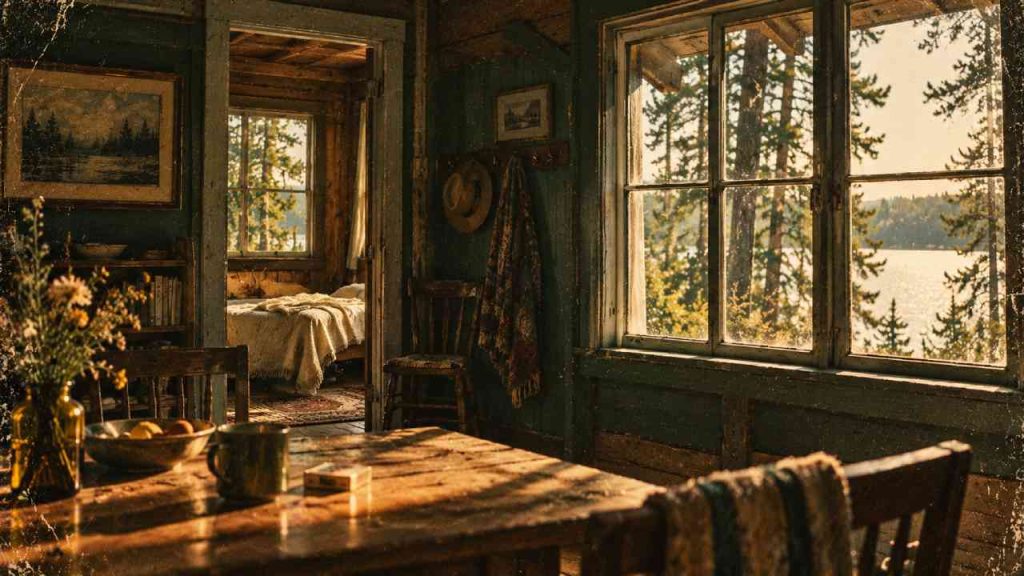
Everyone who cares about scent knows about the Proust Effect, in which French author Marcel Proust famously described how the aroma and flavour of a tea-soaked madeleine transported him back to his youth. Ever since, it’s been the go-to example of scent’s unusual ability to unlock memories. But memory researchers have found that we don’t just remember events we remember them in context, and the environments in which memories are formed are a big part of that.
You know the phenomenon: the smell of White Diamonds, cigarette smoke, peppermint candies, and gasoline—or any combination of two or more of these—and you’re back in your grandparents’ car. A whiff of chlorine, damp concrete, and Coppertone and you’re 10-years old again, standing at the edge of the community pool.
The memory isn’t just the event. It’s the event in the place—because there is always a place—and smell can resurrect it with startling detail. Why? The answer lies in how places become meaningful in the first place, and how it even becomes a “place” rather than merely a “space.”
The Difference Between Space & Place
The distinction between space and place appears in the work of both historian Susanne Rau and geographer Yi-fu Tuan. Put simply, space is an abstract physical area or environment while place is a location that has acquired meaning through human experience, activity, memory, identity, or social significance.
We all carry dozens, or probably hundreds, of places around with us.
Observations on context-dependent memory show that memories are easier to retrieve when we encounter the same context in which they were formed. A place, smell, sound, or other environmental cue can act as a trigger, helping bring the memory back. Research by neuroscientist Rachel Herz, meanwhile, has found that olfactory cues (smell) yielded significantly higher emotional intensity, greater physiological arousal (such as heightened heart rate), and more profound brain activation than visual or verbal cues.
So, basically you’ve got the perfect psychological breeding ground for scent-based place attachment. This is what we mean when we talk about “olmaure,” which is defined as “A sense of place experienced through scent.”
Olmaure isn’t just a trigger for a place—it’s the memory itself. The smell of chlorine isn’t separate from the pool. The smell of old hymn books isn’t separate from the church. The smell of pine needles isn’t separate from the forest. These scents are part of those places.
Creating Olmaure With Intention
When creating atmosphere, whether in a home, hotel, retail space, business, or venue, people go to furniture, paint colours, lighting, artwork, and (sometimes) music. Scent rarely makes the list, and when it does, they usually go buy a Glade plugin or a scented candle at Bath & Body Works with a name like Tahitian Vanilla, or Linen Mist, and call it a day. But scent is one of the most powerful tools we have for creating a sense of place. Most places have an olmaure that develops accidentally. Consider creating it deliberately.
If you want to create a specific olmaure for your home or business, think beyond just making it smell “good,” and more about how it can smell like “somewhere.”
Some ideas for creating a memorable olmaure in your home or business
- Pick a direction and stick with it, at least for a season. Constantly changing candles, diffusers, and room sprays makes it harder for a place to develop a recognizable scent character. That doesn’t mean never switch it up. But give the scent a season, like “Winter 2026.”
- Think in seasons or years, not days. The smells that become attached to places tend to be the ones that are there consistently over time.
- Use scents that support the environment. A lakeside cottage, downtown loft, bakery, bookstore, spa, and law office do not all need to smell like vanilla or peaches.
- Work with the location, not against it. Building materials, plants, food, wood, books, fireplaces, gardens, and even the surrounding landscape all contribute to the olmaure of a place. Work with what is already there rather than trying to overwrite it with whatever fragrance happens to be trending.
- Create scent rituals. Fresh coffee every morning, a particular incense on weekends, a wood fire on cold evenings, fresh herbs in the kitchen. Repeated experiences become part of a place’s identity.
- Less is usually more. A scent should feel woven into a place, not announced from across the room.
- Ask yourself what you want people to experience in your space. How do you want people to feel? Relaxed, comforted, excited, hungry? What scents support this?
The next time you walk into a place you love, pay attention to the air. It’s probably doing more of the work than you realize.